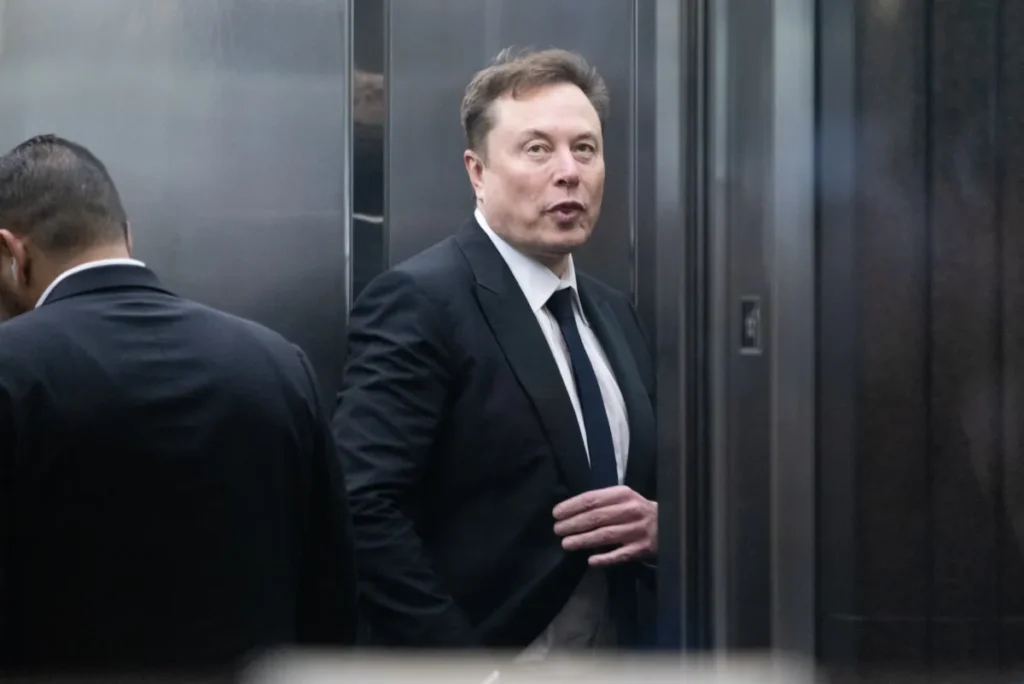

Elon Musk took the stand this week and dropped a pretty candid admission: xAI trained Grok on OpenAI’s models. Specifically, he confirmed that the team used a technique called “distillation” to pull knowledge from GPT-4 into their own system.
Distillation is one of those terms that’s been floating around AI circles for a while, but it’s suddenly become a hot-button issue. The basic idea is that you take a big, powerful model (the “teacher”) and use its outputs to train a smaller, cheaper model (the “student”). The student learns to mimic the teacher’s behavior, often achieving similar performance at a fraction of the cost.
So when Musk says xAI distilled from OpenAI, he’s essentially admitting they reverse-engineered some of GPT-4’s capabilities into Grok. That’s not exactly illegal — model distillation is a common practice in machine learning research. But it gets messy when you consider the competitive dynamics at play.
Here’s the thing: OpenAI’s terms of service explicitly prohibit using their models to train competing models. So either xAI ignored those terms, or they found a workaround. Musk didn’t clarify the legal details in his testimony, but the admission alone is enough to raise eyebrows.
The irony, of course, is that Musk has been one of OpenAI’s loudest critics. He’s sued them, called them out for abandoning their open-source roots, and positioned xAI as the ethical alternative. Now we learn that his “ethical” model was built, at least in part, on the very technology he’s been attacking.
Look, I’m not saying this is some huge scandal. Distillation is everywhere in AI right now. Smaller labs regularly distill from bigger models because training from scratch is prohibitively expensive. Even open-source models like Llama and Mistral have been accused of distilling from proprietary systems.
But Musk’s testimony does highlight a fundamental hypocrisy in the AI industry. Frontier labs complain about distillation while simultaneously benefiting from the open research that made their models possible. OpenAI itself trained on publicly available data, much of which was created by people who never consented to having their work used for AI training.
What I find more interesting is the technical angle. Musk claimed that xAI’s distillation was “minimal” and that Grok is fundamentally different from GPT-4. But if you look at Grok’s early outputs, there were clear signs of GPT-4 influence — similar phrasing patterns, identical reasoning chains, even the same quirks in handling certain prompts. That’s not a coincidence.
The real question is whether distillation matters in the long run. If xAI can build a competitive model using distillation as a starting point, does it matter where the initial knowledge came from? Or does this just accelerate the commoditization of AI, where the only differentiator becomes data and compute rather than fundamental research?
Musk’s testimony also raises questions about xAI’s broader strategy. If they’re willing to cut corners on training data, what else are they cutting corners on? Safety testing? Alignment? Transparency? These are the kinds of questions that keep me up at night.
For now, the industry is in a weird place. Distillation is technically legal but ethically murky. Frontier labs want to protect their IP while also benefiting from the ecosystem they helped create. And Musk, for all his grandstanding about open-source and transparency, is playing the same game as everyone else.
I don’t have a clean answer here. But I do know that the next time someone from xAI gives a talk about ethical AI, I’ll be listening a little more carefully.
Comments (0)
Login Log in to comment.
Be the first to comment!