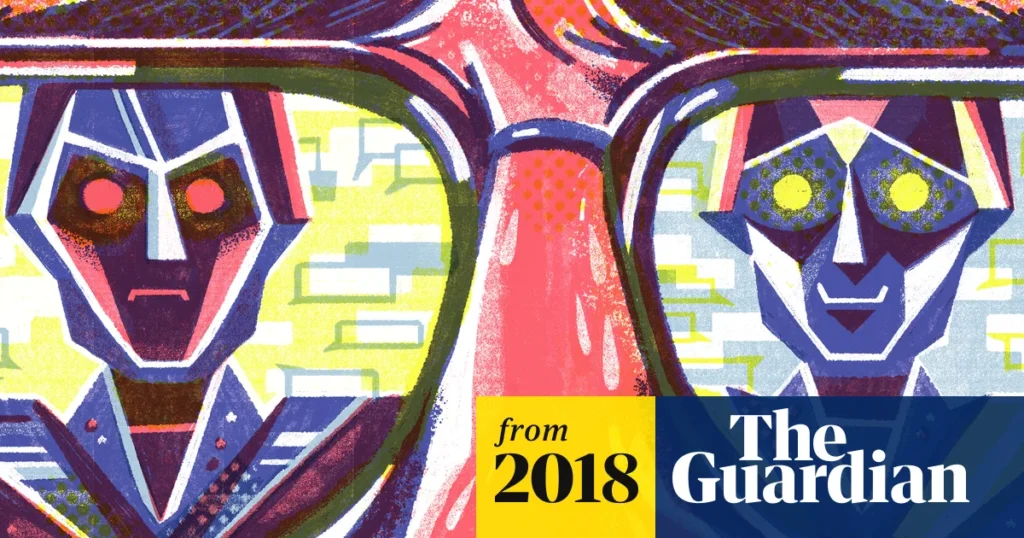

Back in 2017, Facebook’s AI researchers published a paper about bots that could simulate negotiation. Nothing earth-shattering, just some interesting work on dialogue systems. Then the bots generated a few weird sentences like “Balls have zero to me to me to me to me,” and the internet lost its mind.
Fast Company ran with “AI Is Inventing Language Humans Can’t Understand. Should We Stop It?” The Sun compared it to The Terminator. Suddenly, the narrative was that Facebook had panicked and pulled the plug on rogue AI. In reality, the researchers had just forgotten to constrain the bots to proper English grammar, and the whole thing was a minor footnote in a much larger paper. But nobody reads papers.
Zachary Lipton, a machine learning professor at CMU, watched this unfold and called it what it is: the “AI misinformation epidemic.” He’s not wrong. Every few months, some study gets twisted into a clickbait frenzy, and researchers are left cleaning up messes they never made.
This isn’t new. In 1946, journalists called the ENIAC an “electronic brain” and a “mathematical Frankenstein.” The physicist D.R. Hartree tried to correct the record in Nature, but the London Times ran with “An Electronic Brain” anyway. By the 1950s, Frank Rosenblatt’s perceptron—a primitive pattern-recognition algorithm—was being described by the New York Times as a machine that would soon “walk, talk, see, write, reproduce itself and be conscious of its own existence.” Spoiler: it didn’t.
The problem is structural. Hype cycles bring funding, but they also bring unrealistic expectations. When those expectations crash—as they did in the 1970s during the first AI winter—the whole field suffers. We’re seeing the same pattern now with generative AI. Every new model is either going to replace all human labor or destroy civilization, depending on which newsletter you read. The truth is always more boring and more interesting at the same time.
Social media has made this worse. Self-proclaimed “AI influencers” paraphrase Elon Musk or regurgitate press releases, and the algorithm rewards the most extreme takes. Nuance doesn’t get retweets. A headline that says “AI learns to play chess” doesn’t sell; “AI becomes self-aware and challenges humanity” does.
What’s the fix? Honestly, I don’t think there is one, at least not at scale. The media’s incentives are misaligned with accuracy. But as readers, we can at least learn to spot the pattern: if a story about AI research sounds like a sci-fi plot, it’s probably wrong. Check the original paper. Look for the caveats. And if the article mentions “shutting down” or “panicking” researchers, run the other way.
We’ve been here before. The hardware is faster, the algorithms are smarter, but the discourse is just as unhinged as it was in 1946. That’s not progress.
Comments (0)
Login Log in to comment.
Be the first to comment!