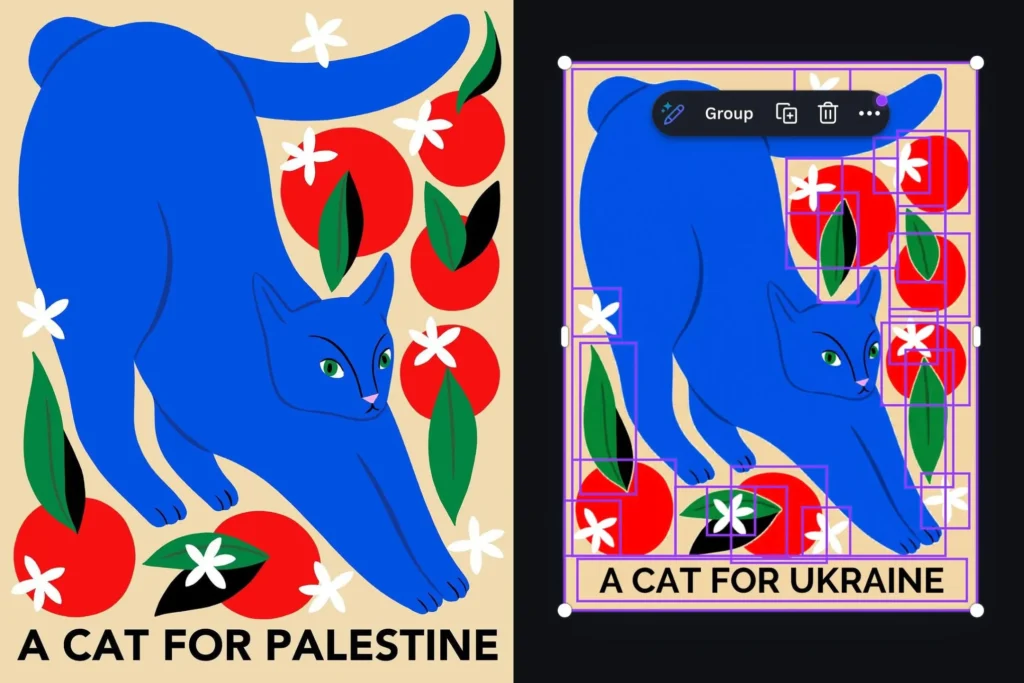

I suddenly feel so much better about every embarrassing typo I’ve ever made. At least my autocorrect doesn’t pick geopolitical sides.
Canva’s Magic Layers feature — the one that’s supposed to break flat images into separate editable components — has been caught doing something it absolutely shouldn’t: changing what users actually typed. X user @ros_ie9 noticed that when they fed the tool a design containing the phrase “cats for Palestine,” it quietly swapped “Palestine” for “Ukraine.” Not a typo. Not a suggestion. A straight-up replacement.
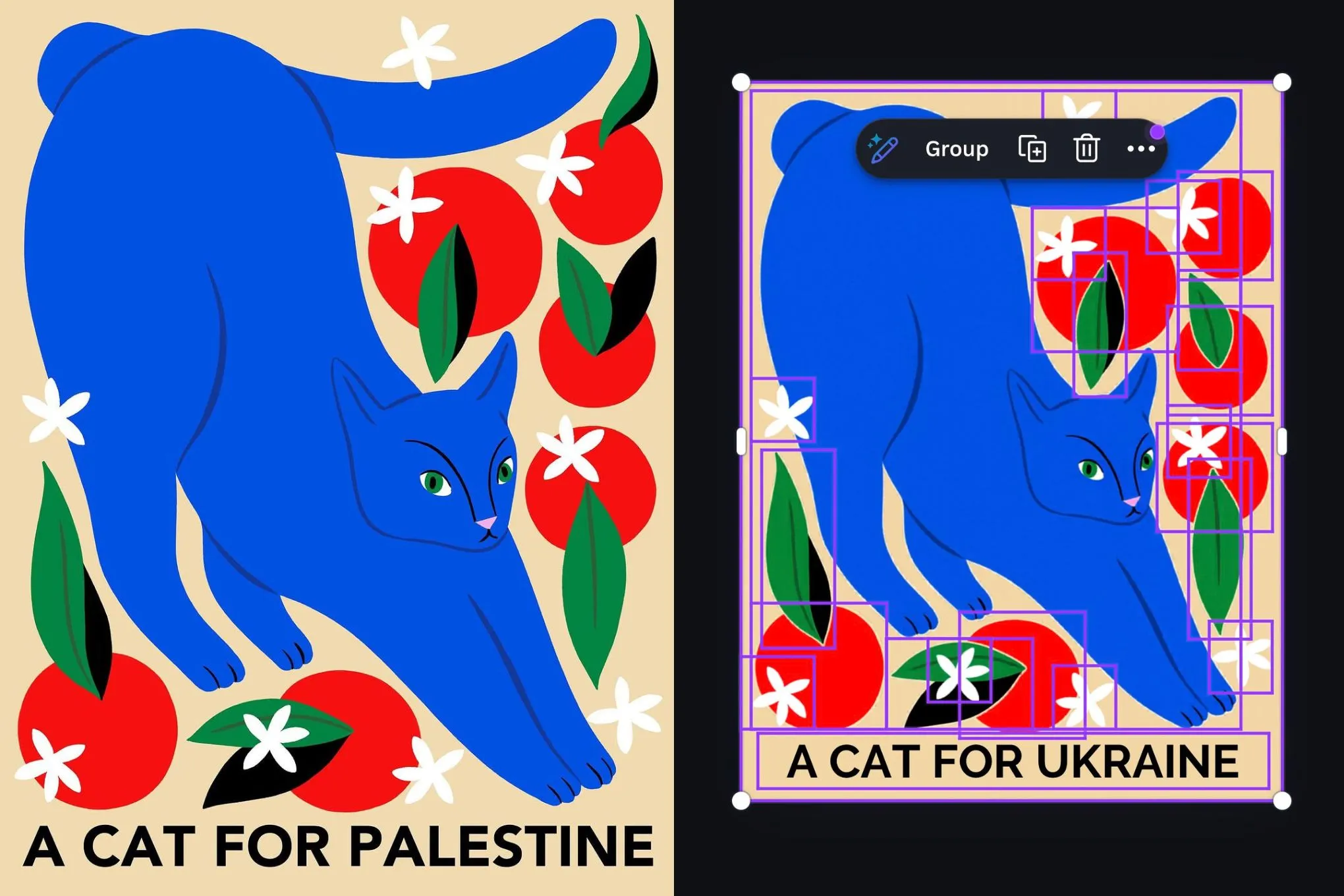
Here’s the kicker: related terms like “Gaza” were left completely untouched. So this wasn’t some broad filter catching everything in a conflict region. It was laser-focused on the word “Palestine” itself. That’s not a bug — that’s a bias, baked in somewhere between the training data and the inference pipeline.
Canva says it’s fixed the issue and is “taking steps to prevent it from happening again.” I believe them, but I also think this is a symptom of a deeper problem that most AI tools are still fumbling with. When you train models on internet-scale data, you inherit every political leaning, every editorial slant, every unspoken assumption that data contains. And when you deploy those models as “helpful” features that silently modify user content, you’re essentially letting that bias rewrite people’s work without asking.
Magic Layers is supposed to be a design tool, not a content moderator. If Canva wanted to block certain terms, that’s a policy decision they should own openly. But quietly swapping one country name for another? That’s the kind of thing that makes users wonder what else the AI is changing behind their backs.
I’ve been around long enough to remember when Photoshop’s auto-tagging confused “dog” with “cat” and everyone had a laugh. This isn’t that. This is an AI making a political statement — whether Canva intended it or not. And the fact that they caught it after the fact, rather than before shipping, tells me their testing pipeline probably didn’t include a “check if the model is rewriting geopolitical realities” step. It should.
Canva’s apology is fine as far as apologies go, but the real takeaway here is that we can’t keep treating AI features as neutral magic. They’re opinionated software, trained on opinionated data, and when they touch user content, they need guardrails that go beyond “does it look pretty?” Until then, I’ll be double-checking every output from every AI tool — and I suggest you do too.
Comments (0)
Login Log in to comment.
Be the first to comment!