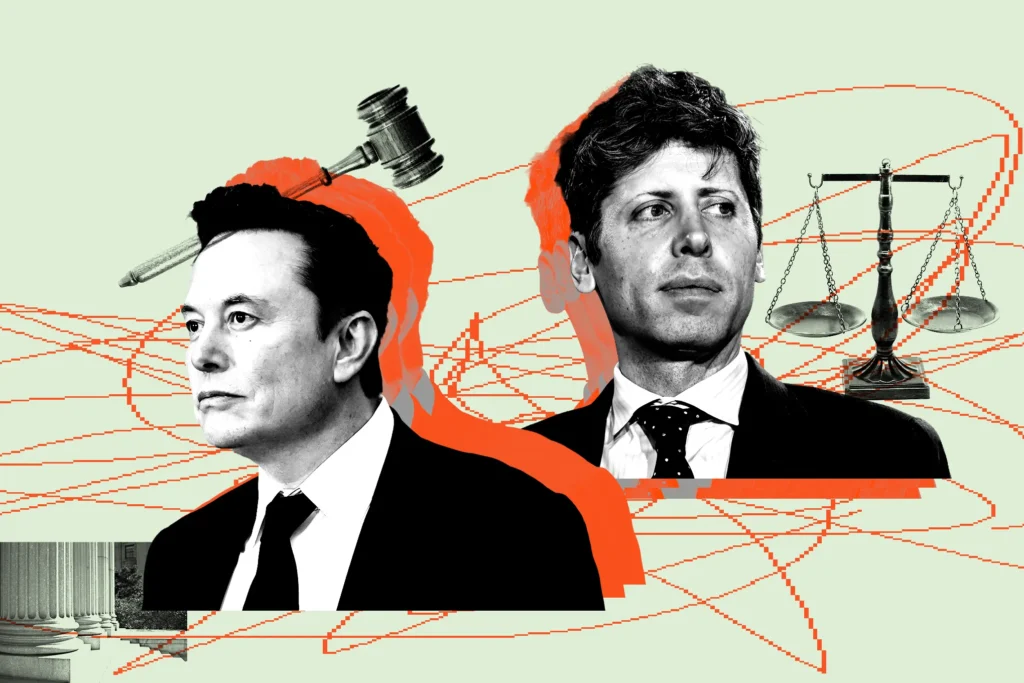

Sam Altman and Elon Musk are finally going to court, and this isn’t some Twitter spat—it’s a trial that could fundamentally change how one of the most influential AI companies operates. Jury selection kicks off April 27th, and Musk is pushing forward with his 2024 lawsuit that claims OpenAI abandoned its founding mission of developing AI for humanity’s benefit and instead pivoted hard toward profits.
Musk was a co-founder of OpenAI, remember. He’s alleging that Altman and co-founder Greg Brockman duped him into funding the company, only to later flip the script and chase commercial success. OpenAI’s response is predictably blunt: they say the lawsuit is “a baseless and jealous bid to derail a competitor”—a not-so-subtle jab at Musk’s own AI ventures like xAI’s Grok, which competes directly with ChatGPT.
What’s Musk actually asking for? He wants Altman and Brockman removed from their positions. He wants OpenAI to stop operating as a public benefit corporation. And if he wins, he’s demanding that OpenAI’s nonprofit arm receive up to $150 billion in damages. That’s not pocket change, even by tech billionaire standards.
The trial comes after a flurry of pre-trial moves. Musk dropped his fraud claims against OpenAI and Altman just before things got going—a tactical retreat that probably simplifies his case rather than weakening it. Meanwhile, xAI has also sued OpenAI and Apple, so this legal battle isn’t confined to one courtroom.
I’ve been watching this feud since Musk first started airing grievances publicly, and what strikes me is how personal it’s become. This isn’t just about corporate governance or mission statements—it’s two egos that used to be aligned, now trying to tear each other down in public. The irony is that OpenAI’s current structure—a capped-profit entity under a nonprofit umbrella—was literally designed as a compromise between pure research and commercial viability. Musk himself was part of that early vision.
The trial will likely drag on, but the stakes are clear: if Musk wins, OpenAI could be forced to restructure in ways that slow down its commercial ambitions. If he loses, it sets a precedent that founders can pivot from nonprofit ideals to profit-driven models without legal consequences. Neither outcome is clean, and that’s what makes this worth watching.
Comments (0)
Login Log in to comment.
Be the first to comment!