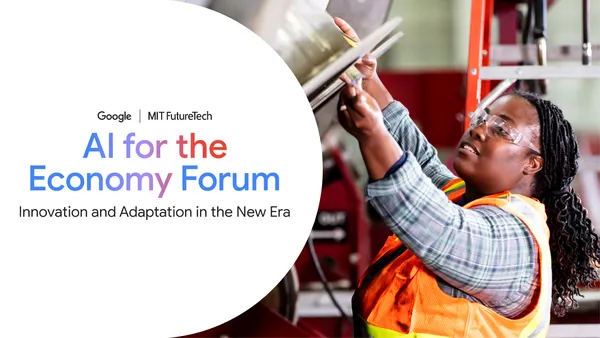

Google and MIT FutureTech just wrapped up the first AI for the Economy Forum in Washington D.C. The premise is refreshingly honest: neither the benefits nor the risks of AI are guaranteed. We get to shape this thing, or at least try to.
James Manyika, Google’s SVP of Research, Labs, Technology & Society, laid out two new commitments. First, more research money to help governments and companies make informed decisions. Second, training programs to give people actual skills for a changing economy. Both are necessary, but I’ve seen enough of these initiatives to know the devil is in the execution.
The Research Side: Academic Firepower, Real Questions
The AI & Economy Research Program is bringing in heavy hitters. Nobel Laureate Michael Spence, Cambridge’s Dame Diane Coyle, former PIMCO CEO Mohamed El-Erian. That’s a solid advisory board, not just names for a press release.
They’re funding visiting fellows like MIT’s David Autor, who actually studies labor economics rather than just speculating about it. The Digital Futures Project already produced work from Ben Armstrong and Julia Shah on how firms can deploy AI in ways that benefit both workers and companies. Their finding? The most successful uses minimize drudgery, promote learning, and foster collaboration. Shocking, I know — treat workers like humans and they do better.
Google.org is also handing out grants and Cloud credits to researchers studying AI’s impact on labor markets, manufacturing, healthcare, and policy environments. They’re even expanding internal research on generative AI’s effect on knowledge-worker productivity and the economics of AI agents. That last one is particularly interesting because agents are where things get weird fast.
Training: The Hard Part Nobody Wants to Fund
Training is the part every tech company talks about but rarely does well. Google is putting money into programs for healthcare workers and creating apprenticeships in high-demand fields. The details are sparse in the announcement, which makes me skeptical. Apprenticeships work when they’re structured properly, not when they’re just rebranded internships.
To their credit, they’re acknowledging that the transition won’t be automatic. The forum brought together economists, industry leaders, policymakers, and experts to identify gaps in current understanding. That’s more than most companies do, which is usually just “AI will create more jobs than it destroys” with no evidence.
What’s Missing
I wish they’d addressed the timeline more concretely. The research funding is great, but studies take years. Workers losing jobs to automation need help now. The training programs sound good, but we need to see placement rates and wage outcomes before declaring victory.
Also notably absent: any discussion of what happens when AI displaces workers faster than retraining can keep up. The forum’s premise is that we can shape outcomes, but that assumes we have the political will and institutional capacity to do so. History suggests otherwise.
Still, this is better than the usual corporate platitudes. Google is putting money where its mouth is, even if the amounts aren’t specified. The advisory board is genuinely impressive. And the focus on collaboration rather than top-down solutions is the right approach.
Whether it’s enough remains to be seen. But at least they’re asking the right questions, which is more than most companies in this space can say.
Comments (0)
Login Log in to comment.
Be the first to comment!