
Nuclear energy is suddenly cool again. Tech companies are desperate for power to run their massive data centers, and they’re throwing money at nuclear projects like they’re the last lifeboat on a sinking ship. The US government is approving new reactor designs. There’s actual bipartisan support for expanding nuclear capacity. It’s a rare moment of alignment.
But here’s the thing nobody wants to talk about at those celebratory ribbon cuttings: we still have no idea what to do with the waste.
Every year, US reactors produce about 2,000 metric tons of high-level radioactive waste. That’s not a small number. And it’s been accumulating for nearly seven decades, sitting in temporary storage at reactor sites across the country. Steel and concrete casks. Cooling pools. These are stopgap measures, not solutions. Experts agree they’re safe for now, but “safe for now” isn’t a long-term strategy.
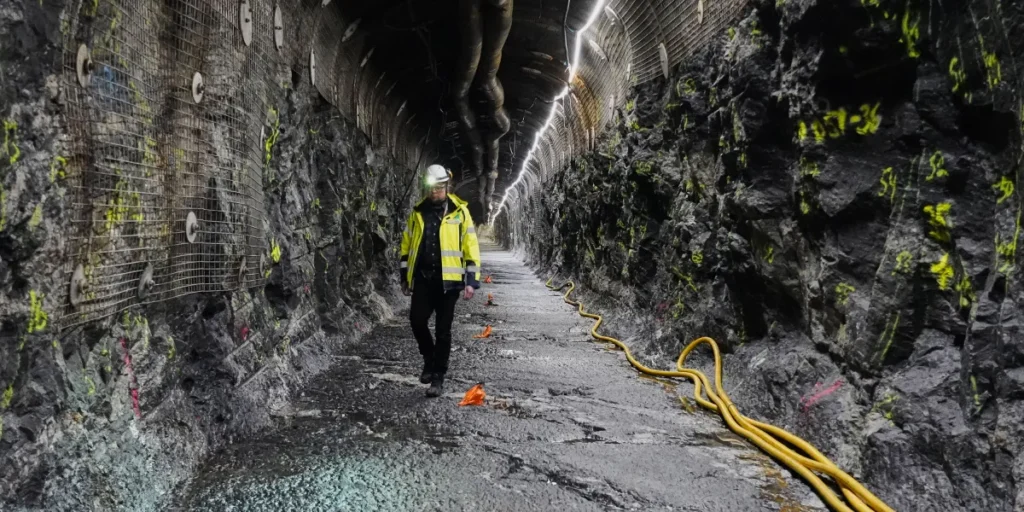
The global consensus on permanent storage is a deep geological repository. Dig a hole hundreds of meters underground, put the waste in, seal it up with concrete. It’s not glamorous, but it works. Finland is actually doing it. Their facility is in the testing phase as of 2026, with final approvals expected soon. They could start accepting waste later this year. Finland started planning this in the 1980s. They picked their site in the early 2000s. It took decades, but they’re almost there.
France is further behind but still ahead of the US. They have the world’s most established reprocessing program, turning spent fuel into mixed oxide (MOX) fuel. But reprocessing isn’t a perfect loop; there are still leftovers that need a permanent home. They’re planning a repository, with pilot operations possibly starting by 2035.
And the US? We have Yucca Mountain. Designated by Congress in 1987. Stalled out by political opposition. Funding was cut in 2011. Nothing has happened since. It’s a dead letter.
Meanwhile, the nuclear industry is accelerating globally. China has the fastest-growing nuclear program. Bangladesh and Turkey are building their first reactors. Even in the US, next-generation reactors are getting regulatory approval. These use different coolants, different fuels, different designs. They’ll produce different kinds of waste. But the fundamental problem remains: where does it all go?
Tech companies pouring billions into nuclear should be asking this question. They have leverage. They have attention. Directing even a fraction of that money and influence toward solving the waste problem could actually move the needle. Some experts are calling for a new US organization dedicated to nuclear waste management, separate from the Department of Energy, modeled on what Finland, Canada, and France are doing.
It’s not a sexy problem. Nobody wins awards for digging a hole and filling it with concrete. But the waste isn’t going away. It’s piling up at reactor sites across the country, and every year we delay makes the eventual solution harder and more expensive.
Finland started in the 1980s. The best time for the US to start was decades ago. The second-best time is now.
Comments (0)
Login Log in to comment.
Be the first to comment!